
Erasing Context: Beyond the Highlight Reel
Black athletes are most often remembered through highlights and statistics. Records broken, rings counted, or moments replayed. What fades is the terrain they had to cross to arrive there. Segregated leagues, hostile crowds, silencing contracts, and punishment for speaking out. The same pattern appears in fashion. Jerseys, sneakers, and athletic silhouettes are worn because they “look cool,” detached from the Black culture, labor, and resistance that shaped them. Style circulates freely while history is edited down.
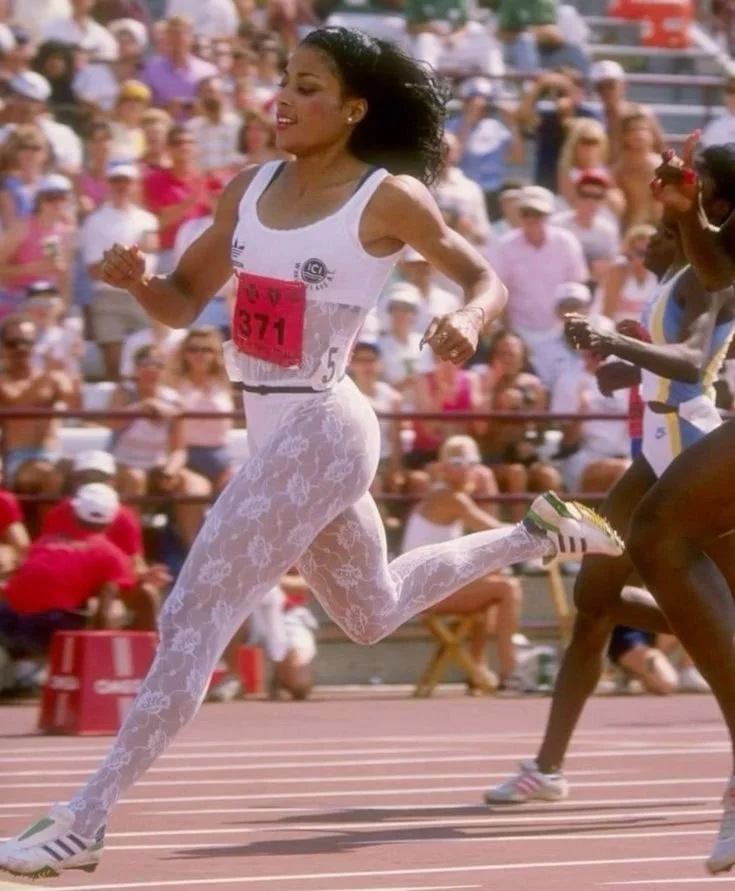
The iconic Olympic fashion of Flo-Jo, Summer 1988 Olympics.
Visibility Without Context
Black athletes are hyper-visible, but selectively so. Often remembered for breaking the color barrier, less for the isolation, surveillance, and abuse endured while being expected to remain composed. Wilma Rudolph is celebrated for her Olympic dominance, but rarely for the conditions she overcame to reach it.
Born in segregated Tennessee, Wilma Rudolph survived childhood illness, disability, and poverty before becoming the first woman to win three track and field gold medals in a single Olympic Games. A Tennessee State alumna, she was not only an athletic phenomenon, but also a civil rights and women’s rights advocate who understood her visibility as responsibility, not spectacle.
The highlight reel compresses struggle into spectacle. It presents success as inevitability rather than survival. Black excellence is framed as natural talent instead of discipline forged inside unequal systems. Visibility without context turns history into performance.
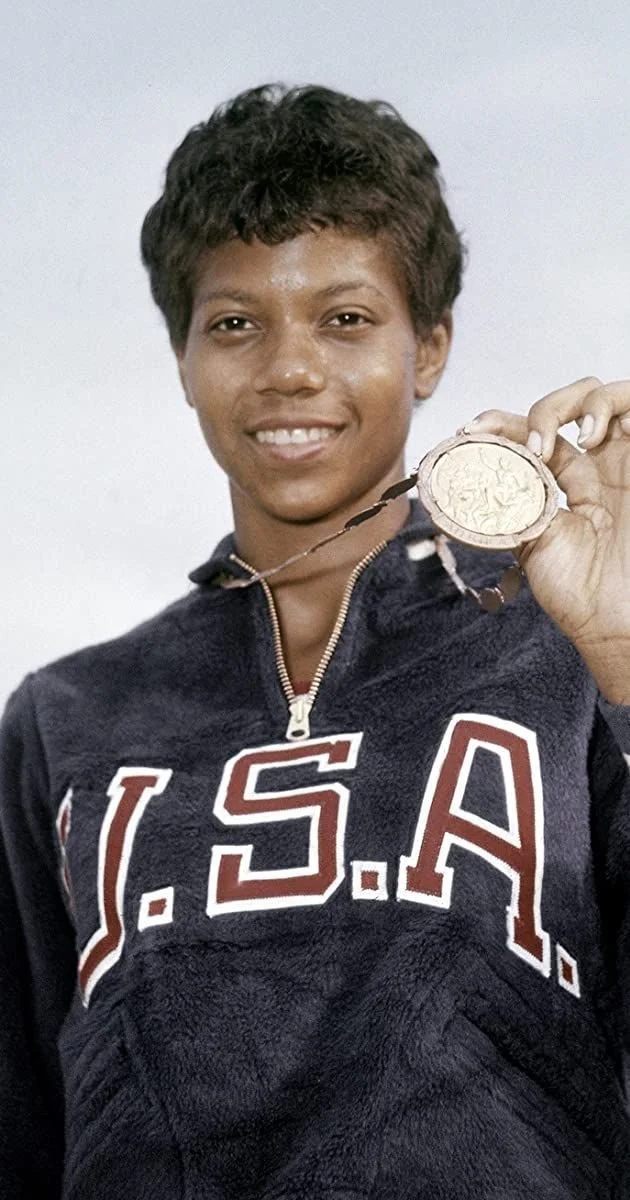
Wilma Rudolph, Rome Olympics, September 1960. Photo via Getty Images/Bettmann.
Performance as Proof
Black excellence is often only legitimized when it is exceptional. Greatness becomes a requirement, not an achievement. Jim Brown was expected to dominate on the field but discouraged from asserting power off it.
When Brown asserted control through civil rights advocacy or by leaving the NFL at his peak, his excellence was reframed as disruption. Performance granted visibility, not autonomy.
This logic is conditional. You may be celebrated, but only while outperforming expectations and remaining palatable. Worth must be proven repeatedly, publicly, and without resistance.
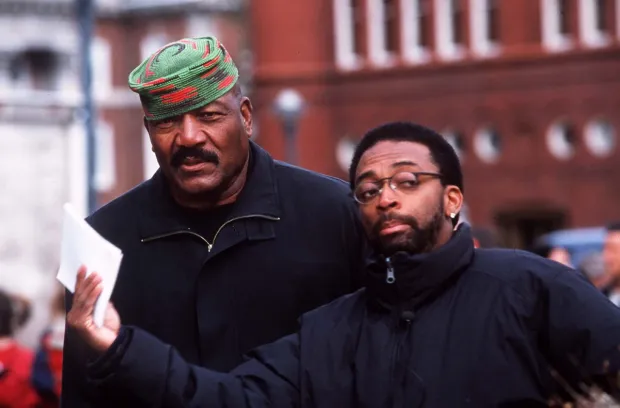
Brown with Spike Lee,“Jim Brown: All American,” 2002. Photo via David Lee/HBO.
From Survival to Style
Athletic fashion begins with function. Loose silhouettes for movement, durable materials for repetition. Sneakers built for courts, tracks, and streets where bodies were always in motion. For Black athletes and communities, these garments were tools of necessity before they were symbols.
Over time, the urgency was stripped away. Jerseys became styling pieces. Sneakers became collectibles. Allen Iverson’s influence reshaped basketball style, yet his cultural impact was often reduced to aesthetics while his challenge to league respectability politics was minimized. What begins as survival is later consumed as style.
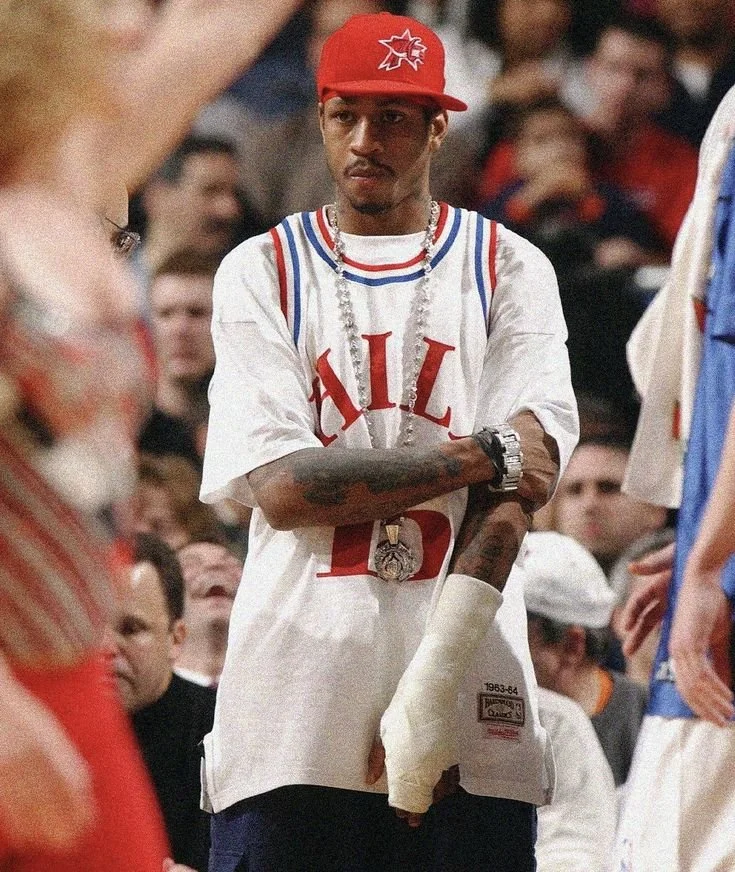
Allen Iverson, 2002. Photo via Getty Images/Jesse D. Garrabrant
The Erasure Loop
Erasure rarely announces itself. It repeats quietly. Highlights shown without history. Style worn without origin. Performance honored without pathway. Florence Griffith Joyner’s speed and image are endlessly replayed, while the scrutiny and suspicion placed on her body fade with time.
Flo-Jo’s dominance in 1988 was met with admiration and doubt, a familiar response to Black women who exceed expectations. Her body was policed, her legitimacy questioned, even as she reshaped the visual language of track. One-legged suits, bold color, long nails. She proved that speed did not require restraint.
That legacy lives on in athletes like Sha’Carri Richardson, whose performance and self-expression are still treated as spectacle rather than standard. The cycle remains, once excellence becomes profitable, it is separated from struggle. Culture moves forward, but context is left behind.
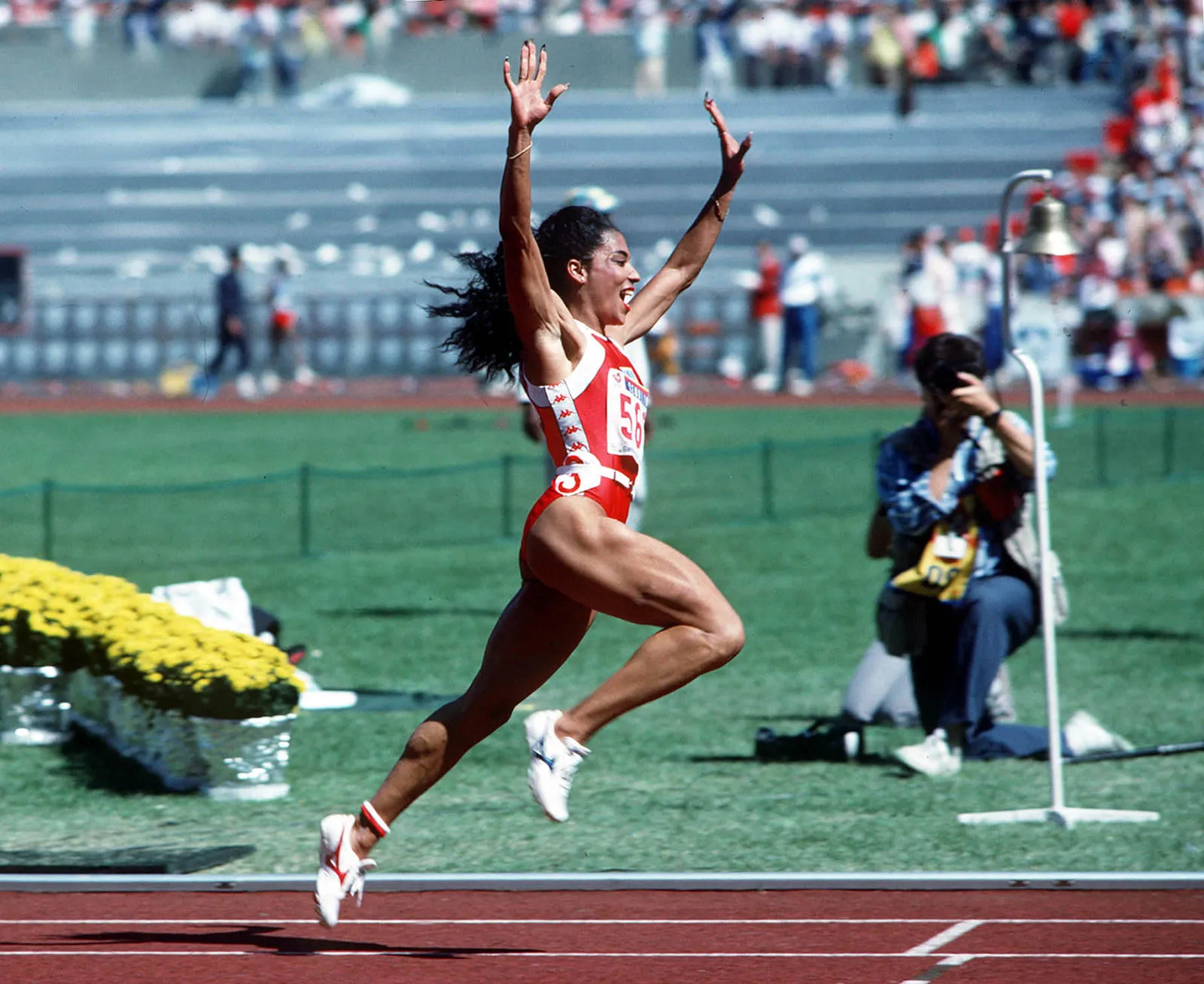
Florence Griffith Joyner winning 100-meter, 1988 Olympics. Photo via Britannica.
Who Gets Remembered, Who Gets Worn
Certain names are preserved, certain styles are recycled. What survives is what can be flattened, repeated, and sold. The athlete has become a reference point, and the uniform an object.
Black culture is worn widely, while Black agency is tightly controlled. Jerseys circulate without acknowledging the individuals who made them meaningful. Sneakers move from courts to closets without carrying the conditions that shaped them. Memory favors what is easy to celebrate, not what is difficult to confront. What gets remembered is achievement. What gets worn is culture. What gets erased is context.
The Walk Forward
Honoring Black excellence requires more than admiration. It requires context, it requires naming systems, not just stars. It means recognizing that sport and style are not neutral spaces, but sites of pressure, creativity, and resistance.
To walk forward is to refuse the highlight-only narrative and demand the full story behind what we celebrate.
