
In Step: Reliability as Style, Not Spectacle
Some trends arrive loudly. Others resurface quietly, already familiar underfoot. Dad shoes belong to the latter. Defined by bulk, cushioning, and unapologetic practicality, they were never designed to signal taste. They were designed to support it. What once read as unfashionable has become foundational, not through irony alone, but through a cultural shift toward comfort, longevity, and lived-in authority. The dad shoe isn’t about nostalgia for a specific decade. It’s about trust. Trust in function, in repetition, in the idea that something worn daily earns its place.
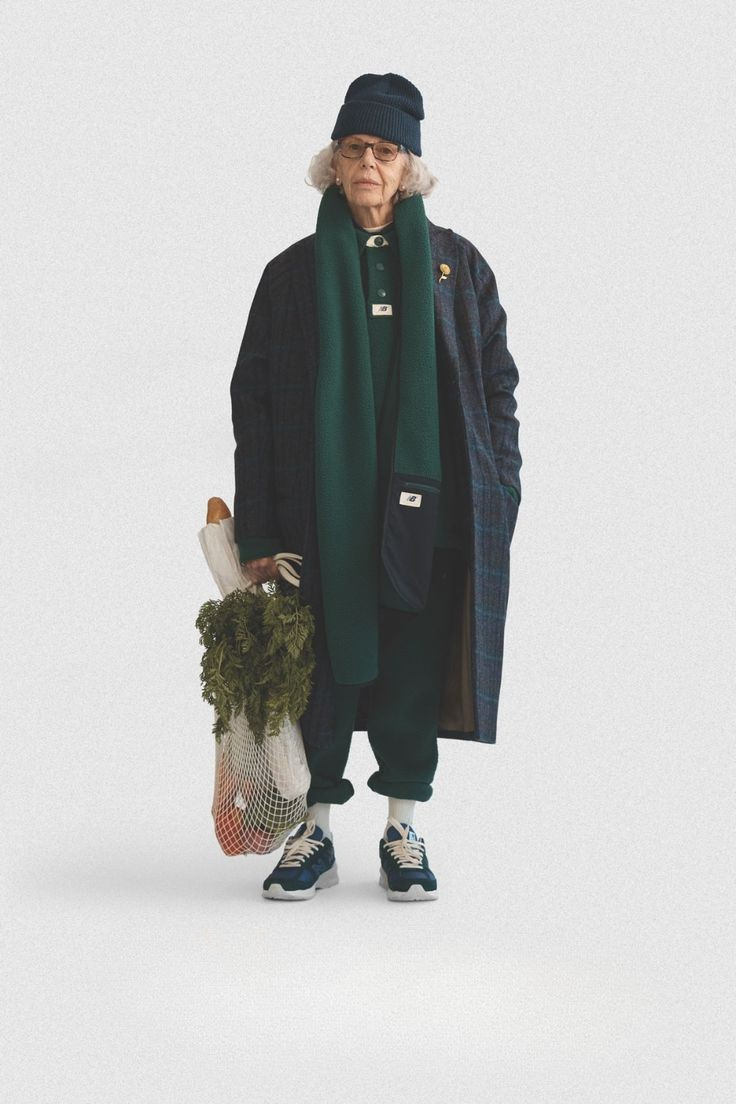
New Balance Aimé Leon Dore Campaign. Photo via Aimé Leon Dore.
Built for Mileage
Before they were styled, dad shoes were worn. These shoes were built for walking the dog, standing all day, jogging slowly but consistently. They valued durability over drama.
Unlike performance sneakers designed for peak output, dad shoes prioritize the sustainability of movement. They weren’t about winning; they were about continuing. That logic, once dismissed, now aligns with a generation less interested in extremes and more focused on balance.
New Balance and the Quiet Authority of Function
No brand embodies the dad shoe resurgence more clearly than New Balance. Long positioned as a performance-first company, New Balance never abandoned its utilitarian roots. While other brands chased novelty, it refined fit, cushioning, and domestic manufacturing narratives.
The 990 series, originally released in 1982, wasn’t retrofitted for relevance. It simply stayed. Its return to cultural prominence speaks less to marketing and more to timing. In a landscape oversaturated with spectacle, the 990’s restraint felt honest. Wearing them suggested refinement rather than trend-chasing.
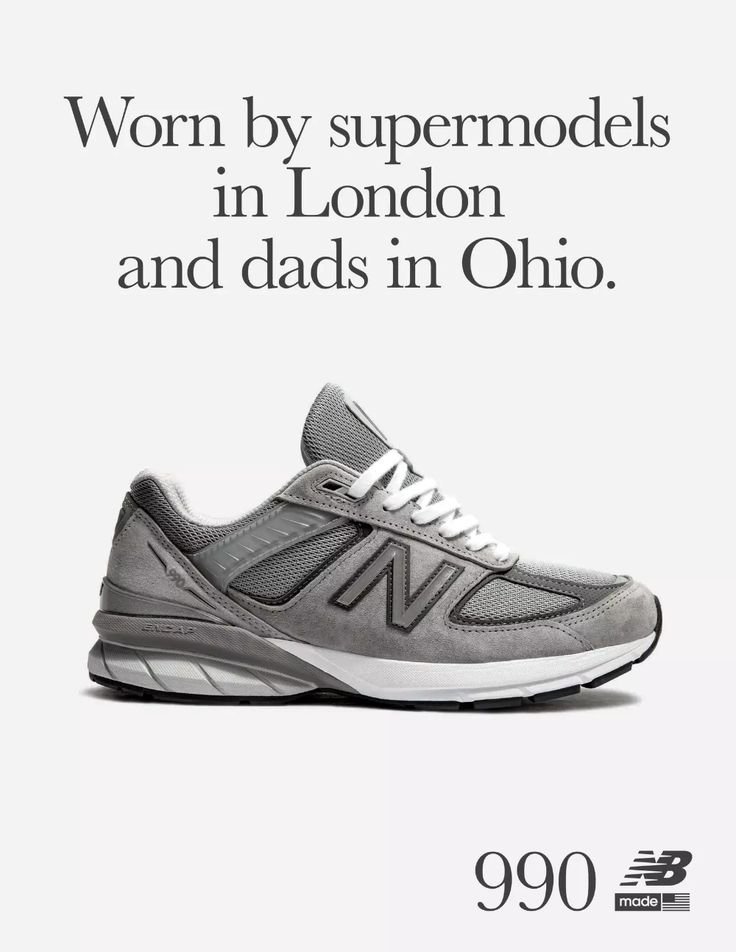
New Balance 990 advertisement. Photo via New Balance.
From Irony to Intent
The dad shoe initially entered fashion through irony. Oversized silhouettes paired with tailored clothing felt deliberately off. The contrast was the point. But irony fades quickly.
Today, dad shoes are worn without explanation. Styled with denim, slacks, athletic wear, and even formal pieces, they no longer rely on contrast to justify themselves. Their bulk now reads as grounding. Their neutrality allows them to disappear into daily life, which is their true strength.
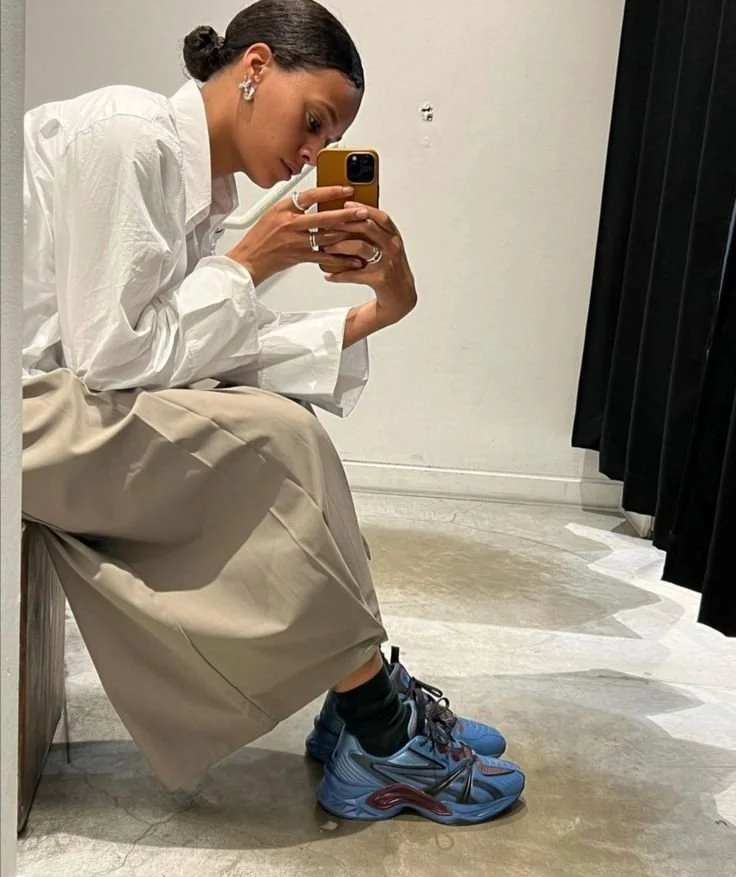
Asics by Kiko Kostadinov. Photo via Pinterest.
Brands That Followed
As New Balance became mainstream, others followed. ASICS leaned into its archival runners. Salomon reframed trail footwear as urban uniform. Nike revisited Monarch and Vomero lines. Even luxury houses entered the space, exaggerating proportions and materials while borrowing the language of comfort.
Yet, the most convincing examples remain closest to function. The closer a shoe stays to its original purpose, the more authentic it feels. Performance-first designs carry credibility that styling alone cannot manufacture.

Asics x BSTN: By Women for Women. Photo via BTSN.
The Shift in Values
Dad shoes reflect a broader change in how fashion measures value. Speed has given way to endurance. Novelty has softened into familiarity. The appeal lies not in how striking the shoe looks on day one, but in how it feels after years of wear.
They align with a cultural preference for objects that improve through use. Creases, scuffs, and softened cushioning are no longer flaws. The dad shoe doesn’t promise transformation, it promises reliability.
Luxury Interprets Comfort
Luxury fashion’s adoption of dad shoes revealed a tension. Elevated materials and exaggerated silhouettes reframed comfort as status. What was once accessible became exclusive. While these reinterpretations pushed the form forward visually, they often removed its core logic.
True dad shoes resist previousness. They are meant to be worn often, without concern. When comfort becomes performative, it loses the humility that made the silhouette compelling in the first place.
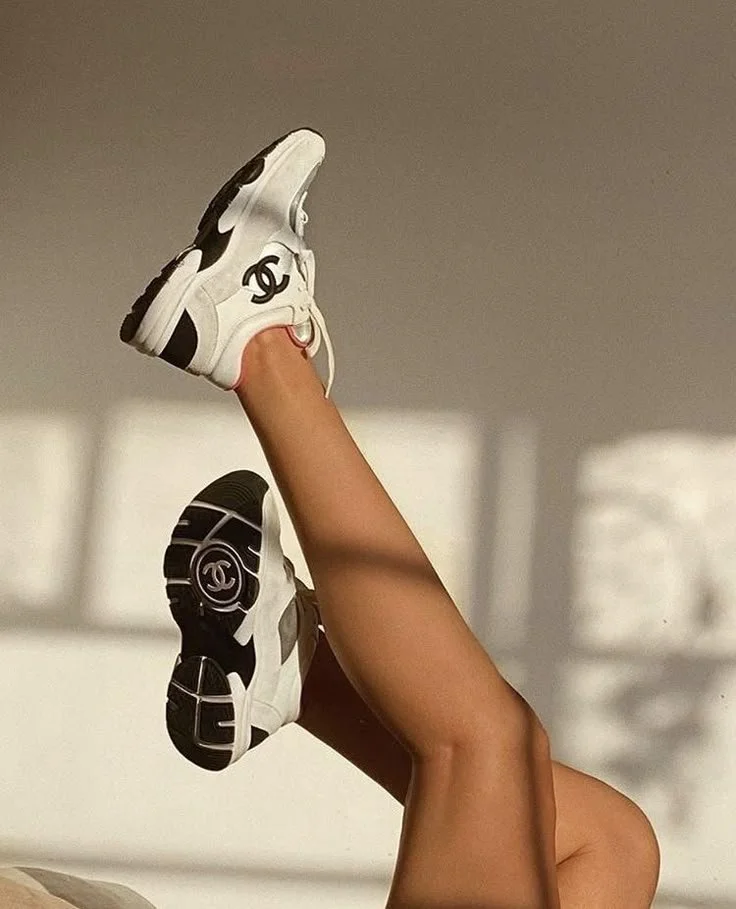
Chanel sneakers. Photo via Pinterest.
The Walk Forward
Dad shoes ask a simple question: what do you rely on every day?
They don’t chase attention, they support motion. In a culture learning to slow down, they offer stability without spectacle. Their resurgence isn’t about looking backward, but about choosing what lasts.
The most meaningful footwear isn’t designed to stand out in a moment. It’s designed to carry you through them.
