
Striped: How Rugby Became a Cultural Uniform
What we wear often starts somewhere else. In texture, in movement, in necessity. From the weight of stitched cotton to the bold language of stripes, function evolves into fashion, and eventually, culture. Rugby shirts carry stories of grit, belonging, and identity, woven into garments built for impact and reinterpreted through style. Once designed to endure mud and motion, the rugby jersey now moves effortlessly through wardrobes, runways, and thrift racks, proving that the most lasting pieces are shaped by history and worn forward.
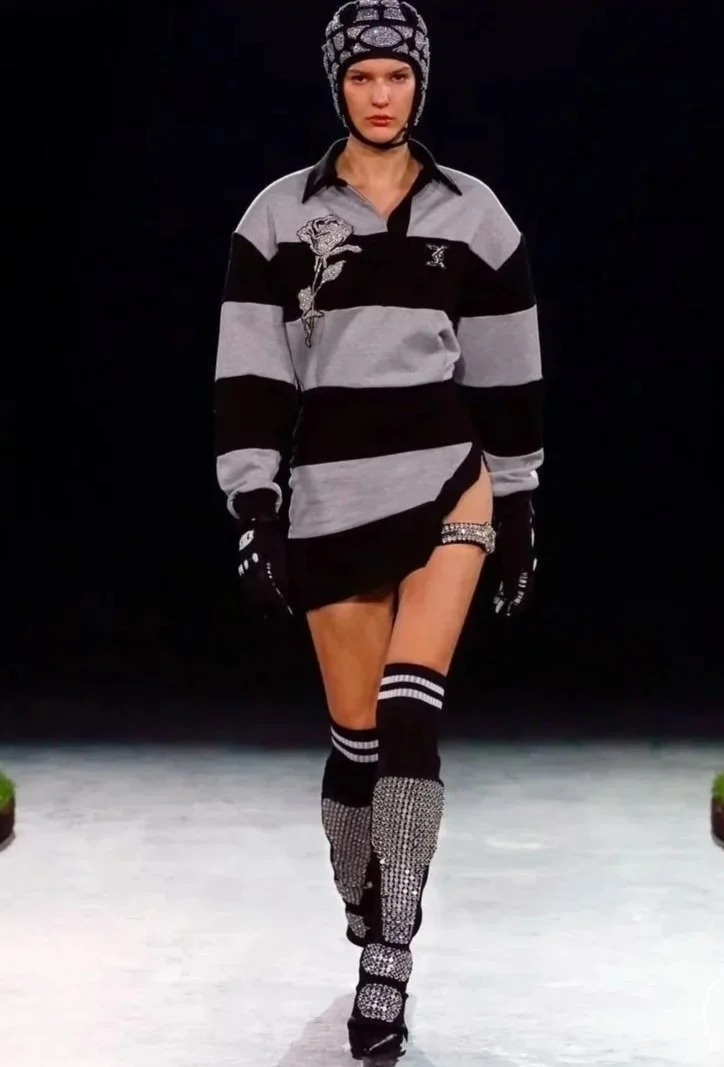
David Koma Fall/Winter ‘22. Photo via TagWalk.
From Muddy Pitches to Cultural Uniform
Rugby was never meant to be polished. Born in 19th-century England, the sport grew out of playground rules, fields, and a culture that prized toughness and teamwork over spectacle. Early kits were heavy cotton jerseys; striped, long-sleeved, collar-topped. They were built to survive mud, rain, and repeated washes. These weren’t fashion choices; they were tools. But like most things with lineage, function eventually became form.
By the early 20th century, rugby had spread beyond England. Each club’s colors told a story: place, class, rivalry. The jersey became a badge, one less about winning and more about belonging. That sense of coded identity is what would later make the rugby shirt ripe for fashion’s attention.
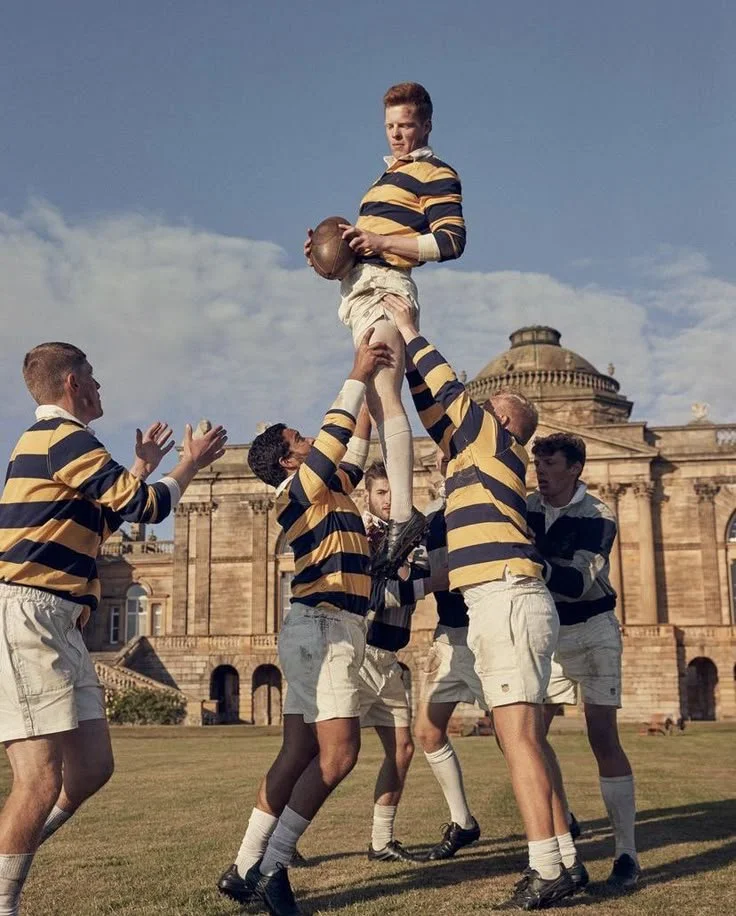
Ralph Lauren Men’s. Photo via Richard Phibbs.
The Rise of the Rugby Shirt
The leap from pitch to street didn’t happen overnight. Rugby shirts entered everyday wardrobes quietly. They were worn by students, artists, and outsiders who liked the weight of the fabric and the confidence of the stripe. In the U.S., the look filtered through prep culture in the ’70s and ’80s, then fractured into something more expressive by the ’90s.
Designers noticed the tension. The rugby shirt carried heritage without feeling precious. It looked academic but worked casually. It was uniform-adjacent without being restrictive. Brands like Ralph Lauren helped canonize the silhouette, while underground scenes adopted it for different reasons: durability, irony, and contrast.
The rugby shirt’s appeal lies in its contradictions. It’s sporty without being sleek, it’s traditional without being stiff, and it’s loud in color yet quiet in intention.
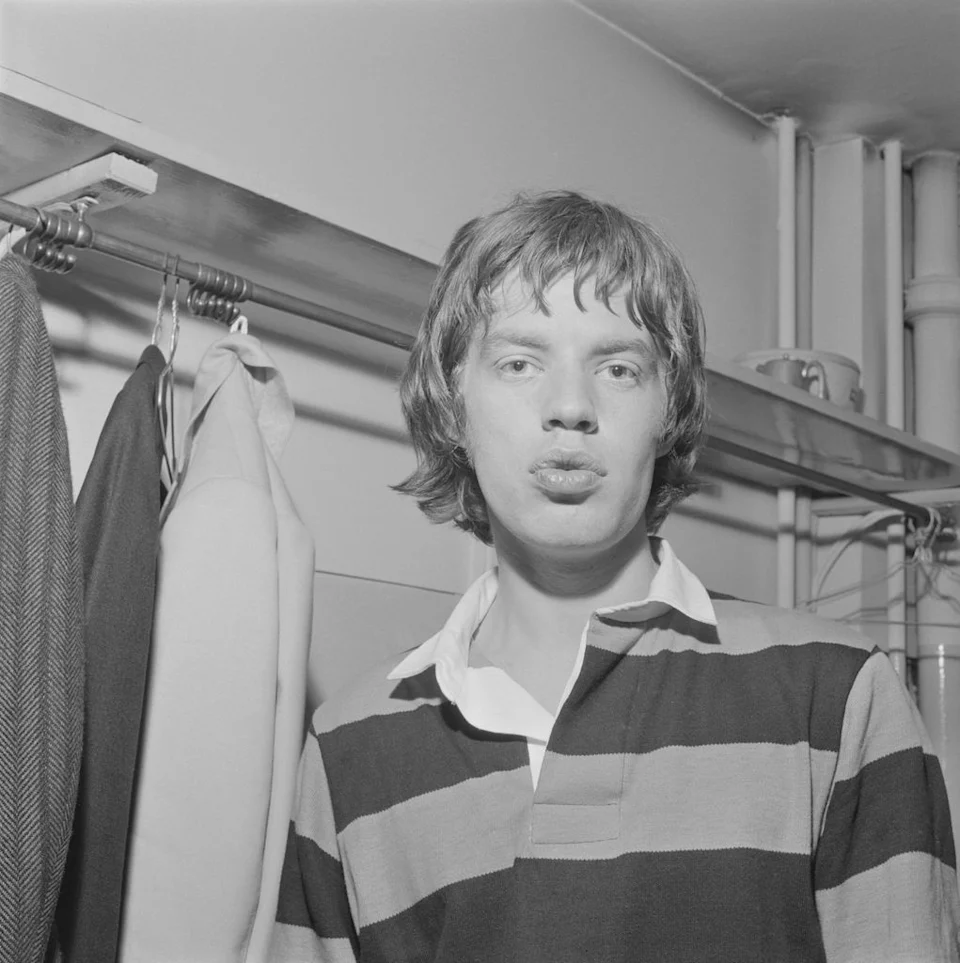
Mick Jagger in rugby jersey, Scotland 1964. Photo via Getty Images.
A Woman’s Style Choice: Rewritten
Once tethered to menswear codes and athletic masculinity, the rugby shirt has been quietly reclaimed by women. What was once oversized by default is now oversized by design. Women wear rugbys slouched off one shoulder, cinched at the waist, cropped above the hip, or layered over sheer skirts and tailored trousers.
Designers have leaned into this shift. On recent runways, rugby silhouettes appear elongated, re-proportioned, or softened. They are styled with heels, gloves, and sharp beauty looks that reject the idea that sport-derived pieces must read casual. The rugby shirt becomes armor and expression at once; strong, graphic, and intentional.
In street style, the message is even clearer. Women aren’t borrowing from menswear anymore, they’re rewriting it. The stripe becomes a statement of confidence rather than conformity. The collar frames power, not prep. This evolution reflects a broader cultural move; women choosing garments with history and weight, then bending them to fit personal narratives rather than inherited rules.
The modern rugby shirt on women isn’t about nostalgia or uniform. It’s about control. Taking something built for impact and wearing it on your own terms.
The Luxury of the Stripe
Luxury fashion didn’t reinvent the rugby shirt, it reframed it. On recent runways, the silhouette has been elevated through fabric, proportion, and context, proving that a garment rooted in utility can speak fluently in the language of luxury.
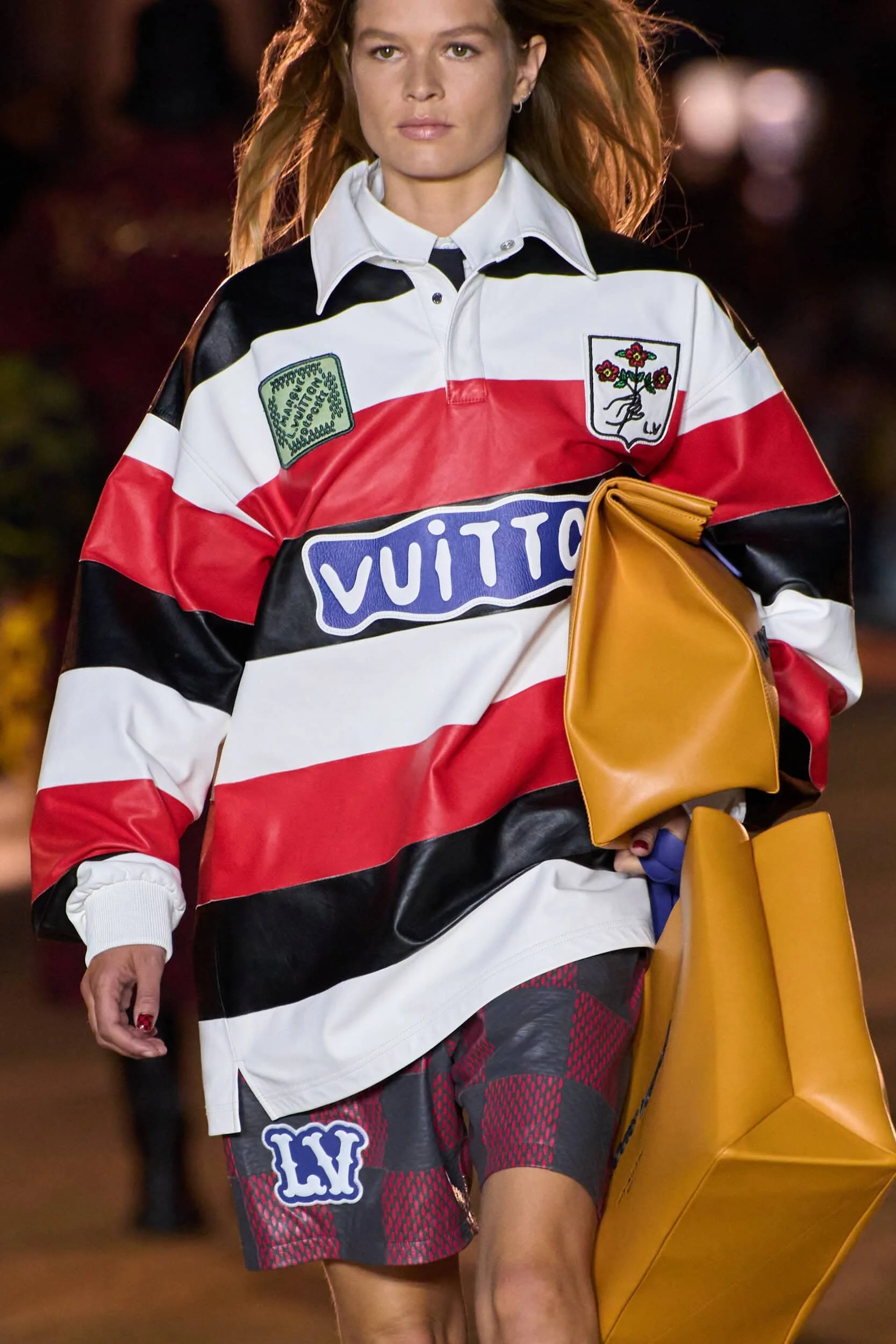
Louis Vuitton Spring Summer ‘24. Photo via LV.
At Louis Vuitton, the rugby shirt appears sharpened and intentional, styled alongside tailored trousers and elevated accessories. Stripes feel deliberate rather than nostalgic, signaling how heritage sportswear can function as a modern status code when placed within a luxury system. The piece reads less like athletic wear and more like cultural shorthand, they are recognizable and confident.
Tommy Hilfiger approaches the rugby through its deep ties to American prep, amplifying bold striping, oversized fits, and logo-forward styling. The result balances nostalgia with scale and attitude, treating the rugby shirt as both archive and update. It isn’t about preserving tradition; it’s about making it visible again.

TommyNow Fall ‘22. Photo via Vogue.
In both interpretations, the rugby shirt operates as a bridge: between sport and runway, utility and image, history and reinvention. Luxury doesn’t strip the piece of its grit; it frames it, reminding us that heritage gains power when it’s worn forward, not frozen in time.
Thrift Culture and the Second Life of Stripes
Thrift culture didn’t just revive the rugby shirt; it redefined it. Secondhand racks are where the best rugbys live. Whether it’s faded stripes, softened collars, crests half-cracked from time, these details matter. They signal history without explanation.
For Gen Z and young creatives, the appeal is layered. Thrifted rugbys resist fast fashion cycles, carry authenticity, and offer individuality in repetition. Wearing one isn’t about the logo; it’s about the life it’s already lived.
In this space, the rugby shirt becomes anti-trend. It’s timeless by accident. Styled oversized or cropped, tucked or loose, it adapts without losing itself. The thrifted rugby isn’t only nostalgic, it’s a memory worn forward.

Sierra Rena in oversized rugby shirt. Photo via Pinterest.
The Walk Forward
Rugby shirts endure because they refuse to be rebranded into something they’re not. They carry grit, history, and structure in a way few garments do. From muddy fields to thrift racks, from prep to street, the rugby shirt has moved through cultures without losing its core.
Today, it stands as a reminder that the most influential pieces aren’t designed to trend; they’re built to last. Worn in, passed down, reinterpreted. The rugby shirt isn’t chasing relevance. It already has it.
Stripes don’t fade. They evolve.
