
Surfs Up: Coast to Coast Style
For centuries, coastal style has spoken louder and more intentionally than most urban wardrobes. It isn’t simply clothing shaped by the ocean; it’s a dialogue between environment and identity. Surf style grew out of necessity, but like many subcultures, it evolved into something expressive, rebellious, and deeply personal. Whether it’s off the coast of Hawaii, California, Sydney, or Taghazout, the language of surf style remains recognizable: sun-faded color, relaxed silhouettes, and garments built for movement. There’s something freeing about letting the ocean guide your style. It’s functional, high-performance, and quietly confident. Surf culture never tried to become fashion, fashion came to it.

Surfing in Morocco. Photo via Girl on the Wave.
The First Wave
Surfing began long before it became a sport, a brand, or a lifestyle aesthetic. Across the Pacific, Polynesian communities practiced he‘e nalu, or “wave sliding,” centuries before the modern surfboard existed. The ocean was not simply recreation; it was culture, ceremony, and identity.
In Hawaii, especially, surfing held deep social significance. Chiefs and skilled riders often commanded the most powerful waves, earning the activity its reputation as the “sport of kings.” Surfboards were carved from solid wood and could stretch over fifteen feet long, shaped with care and spiritual intention.
Wave riding was not limited to Polynesia. Archaeological carvings in Peru show fishermen riding waves on caballitos de totora, reed boats that are still used today. Surfing was less about spectacle than connection. To ride a wave was to move with the ocean rather than against it, a philosophy that would later shape the entire culture surrounding the sport.
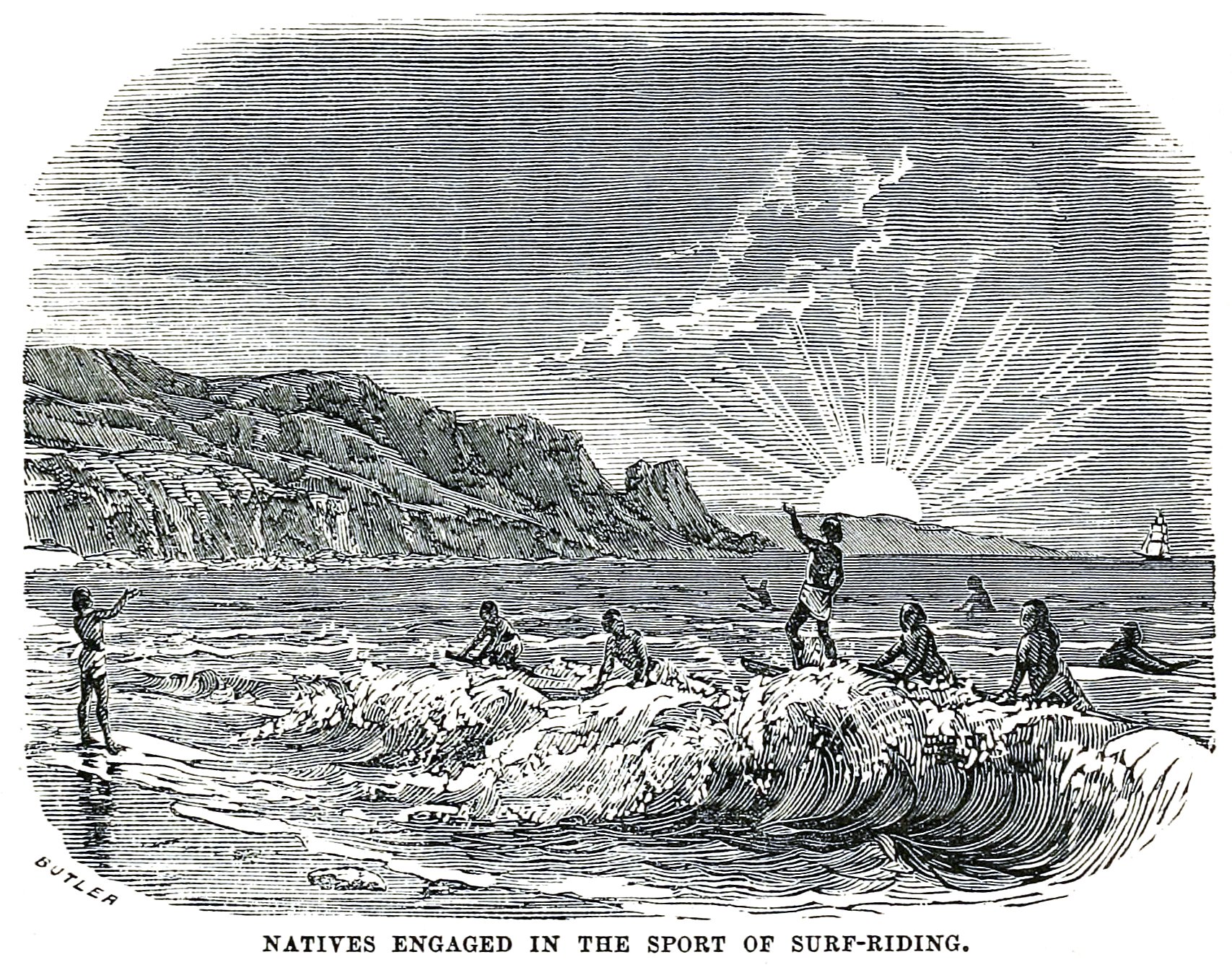
Surf-riding. Photo via Butler.
The Roots: Hawaii
Hawaii remains the spiritual center of surf culture. When Polynesian settlers arrived in the islands thousands of years ago, they brought with them the traditions that would eventually define surfing.
The act of riding waves was woven into everyday life. Surfing competitions were held between communities, skills were passed through generations, and boards were crafted from native wood using traditional techniques. Both men and women surfed, and the ocean functioned as a place of both recreation and ceremony.
That tradition faced disruption in the 19th century when European missionaries discouraged many Indigenous Hawaiian practices, including surfing, which they viewed as improper. Over time, participation began to decline.
Long before surf brands existed, Hawaiian surfers wore lightweight garments suited to the island climate. Boardshorts emerged as the defining piece. Designed for movement and durability, they became synonymous with surf identity. Floral prints, tropical palettes, and relaxed tailoring reflected the island’s visual culture. Surf style here wasn’t about trends. It was about rhythm: the rhythm of waves, of weather, and of everyday life near the water.

Duke Kahanamoku, Hawaiian Olympian. Photo via Kamehameha Schools.
Coastal Influence
Surfing’s revival began in the early 20th century and quickly traveled beyond Hawaii’s shores. Legendary Hawaiian swimmer Duke Kahanamoku, an Olympic gold medalist, became one of the sport’s earliest ambassadors. Through demonstrations across the United States and Australia, he introduced global audiences to the art of wave riding.
Around the same time, surfer George Freeth began performing along the Southern California coast, drawing crowds and turning curiosity into fascination for the sport.
By the 1950s and 60s, surfing exploded into mainstream culture. Technology made boards lighter and easier to maneuver, transitioning from solid wood to foam cores covered in fiberglass. Suddenly, surfing was more accessible than ever before.
California became the new cultural epicenter. Surf towns like Malibu and Santa Cruz shaped a lifestyle defined by sun-bleached hair, canvas sneakers, and salt-worn clothing. Surfing had moved from tradition to a global phenomenon.

California surf style. Photo via Tom Kelley/Getty Images
The Global Wave
As surf culture expanded, coastlines around the world began developing their own identities. Morocco’s Atlantic coast emerged as one of the most distinctive.
Surf towns like Taghazout became gathering places for international surfers. Here, surf culture mixes with local rhythms; loose linen garments, sun-worn fabrics, and North African textiles.
Unlike California’s commercialized beach scene, Morocco’s surf communities retain a quieter atmosphere. Fishing boats share the harbor with surfboards, and the style reflects that balance between tradition and movement. It’s proof that surf culture adapts to place. The ocean may connect these communities, but the style always reflects the shoreline it grows from.

Escape to Tamraght. Photo via Swell & Soul.
Retail Exploitation
By the late 20th century, surf culture had transformed into a global industry. What began on Hawaiian beaches evolved into an aesthetic marketed worldwide.
Surf brands expanded quickly. Brands like Bilabong, Quicksilver, and Hurley started selling the image of coastal freedom to consumers far from the ocean. Graphic tees, boardshorts, and logo-heavy hoodies were the most popular.
Pop culture helped accelerate this wave. Surf films, music, and magazines created hype around the lifestyle. For many, the idea of surfing became just as powerful as the act itself. Yet even as the look became commercialized, the core values of surf culture remained rooted in the water. Real surfers still built their lives around tides, weather, and the quiet rhythm of the ocean.

Billabong x Wrangler. Photo via Bilabong.
Stussy
What began as a surfboard signature eventually became one of the most influential logos in modern fashion. In the early 1980s, California shaper Shawn Stussy began printing his distinctive handwritten signature on T-shirts and caps to promote the surfboards he was shaping along the Laguna Beach coast. What started as simple merchandise quickly evolved into something larger.
The brand grew at a moment when surf culture, skateboarding, and emerging street scenes were beginning to overlap. Unlike traditional surf companies focused purely on performance gear, Stüssy leaned into graphics, attitude, and cultural crossover. The clothing reflected the relaxed silhouettes of coastal life—loose tees, casual shorts, and easy layers—but it also carried a sharper visual identity that resonated far beyond the beach.
By the late 1980s and early 1990s, Stüssy had moved from surf shops into global street culture. The brand connected surfers, skaters, musicians, and artists across cities from Los Angeles to Tokyo and London. In many ways, Stüssy proved that surf culture could travel. What began on a Southern California coastline became a global symbol of casual rebellion and creative independence. While other brands sold the idea of surfing, Stüssy exported the attitude behind it.
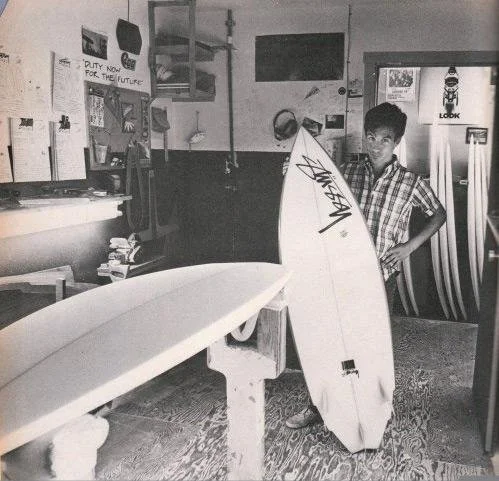
Shawn Stussy. Photo via NSS Magazine.
The Walk Forward
Surfing began as a cultural ritual, nearly disappeared under colonial pressure, and returned as one of the most recognizable lifestyles in the world.
From Hawaiian boards to California youth culture and Morocco’s Atlantic surf towns, the sport has carried its identity across oceans and generations.
Fashion has borrowed heavily from its language: relaxed silhouettes, sun-worn fabrics, effortless confidence. But surf style was never designed; it was lived.
And like the tide, it keeps coming back.
