
Ritual of the Ring: Float Like Fabric
Before boxing became aesthetic, it was a ritual. Boxing was preparation, presence, and performance simultaneously. The walk to the ring is as deliberate as the fight itself, and over time, that walk has become one of the most influential runways in sport. Boxing style has always lived in duality, there is the brutality of the sport, and then there is the elegance surrounding it. Trainers, sweats, robes, boots, each piece designed for function and elevated through repetition and ritual. In boxing, nothing is accidental, and every detail is earned. Over time, these same garments left the gym and entered culture.
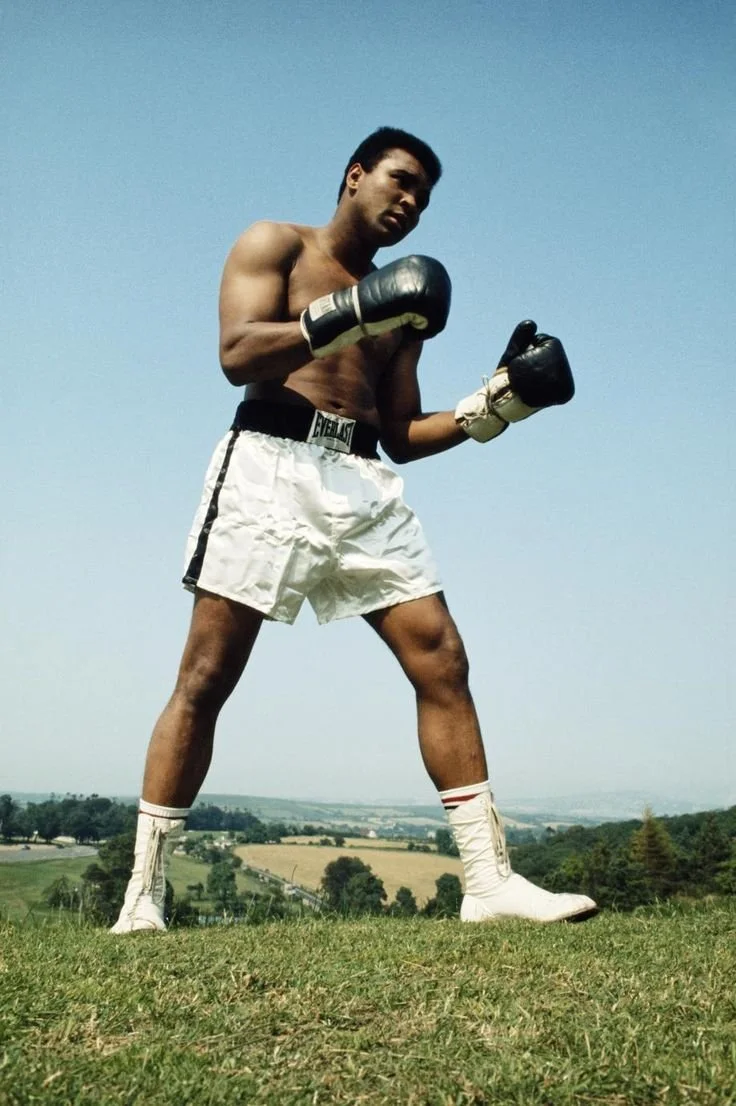
Muhammad Ali, 1972. Photo via Don Morley/Getty Images.
Like a Bee: Muhammad Ali
At the center of that transformation stands Muhammad Ali. Not just for how he fought, but for how he arrived. Satin robes, crisp lettering, controlled spectacle. Ali understood something early: visibility is power. The robe wasn’t decoration, it was his declaration.
Movement, confidence, rhythm; everything extended beyond the ropes. Long before fashion recognized athletes as cultural figures, Ali had already defined what it meant to be seen.

Muhammad Ali, 1965. Photo via Rolls Press/Popperfoto via Getty Images.
On Screen: From Rocky to Creed
Film translated boxing style into something global. Rocky introduced a raw, working-class version of boxing style; gray sweats, worn sneakers, and discipline as identity. It wasn’t polished, it was earned, and the streets became as important as the ring.
Decades later, Ryan Coogler’s Creed reframed that same language. The silhouettes sharpened, and training became cinematic. What once felt local became global again, this time with intention.

Michael B. Jordan, 'Creed II'. Photo via Barry Wetcher.
From Ring to Retail
Boxing style didn’t stay in the gym. Brands began reinterpreting boxing footwear into lifestyle silhouettes. High-top constructions, slim soles, ankle support, all originally designed for agility now exist in everyday wear.
Everlast maintains the sport’s authenticity, while companies like Nike and Adidas translate those roots into modern design. Even luxury fashion has stepped in, reshaping boxing boots into elevated pieces. The function stayed, but the context changed.
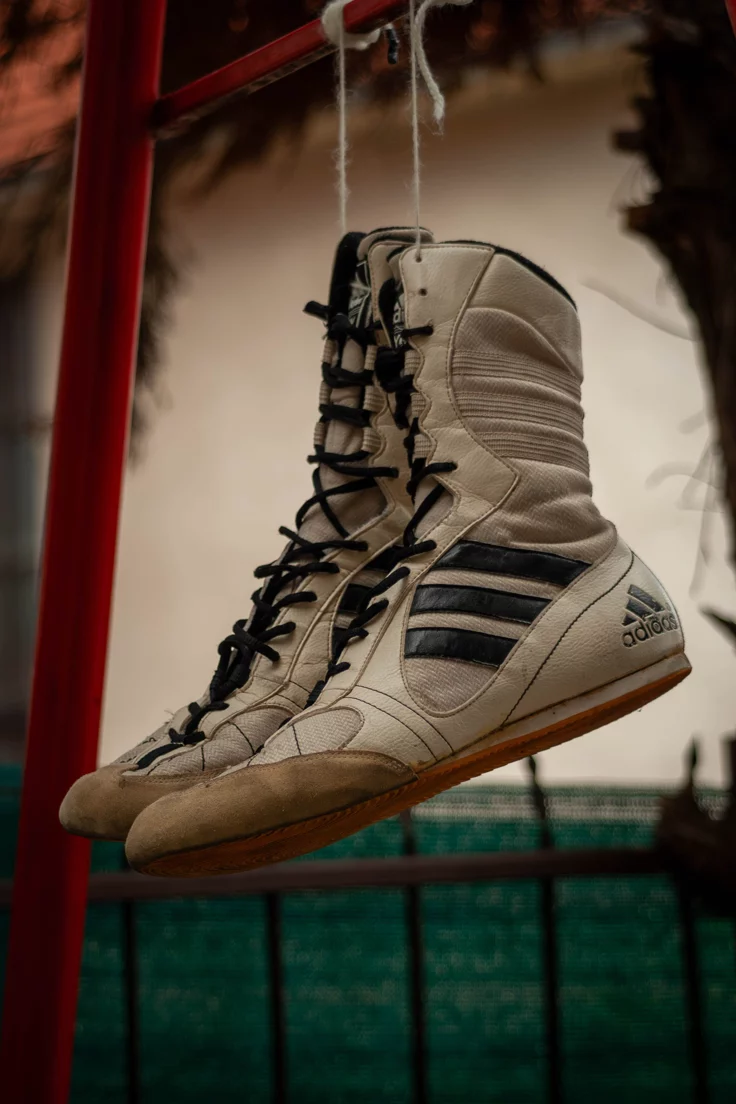
Adidas Tygun boxing boots. Photo via Adidas.
High Fashion Evolution
In recent years, boxing has moved beyond reference and into reinterpretation. Designers have adopted the language of the ring: satin finishes, belted robes, and exaggerated shorts.
The boxing robe, once a symbol of preparation, now appears as statement outerwear. Shorts designed for movement are elevated through material and tailoring. Even the structure of boxing boots has been reworked into runway footwear.
What was once purely functional is now conceptual. The aesthetic remains rooted in discipline, but it’s been detached from the fight itself. In high fashion, boxing becomes less about combat and more about presence.
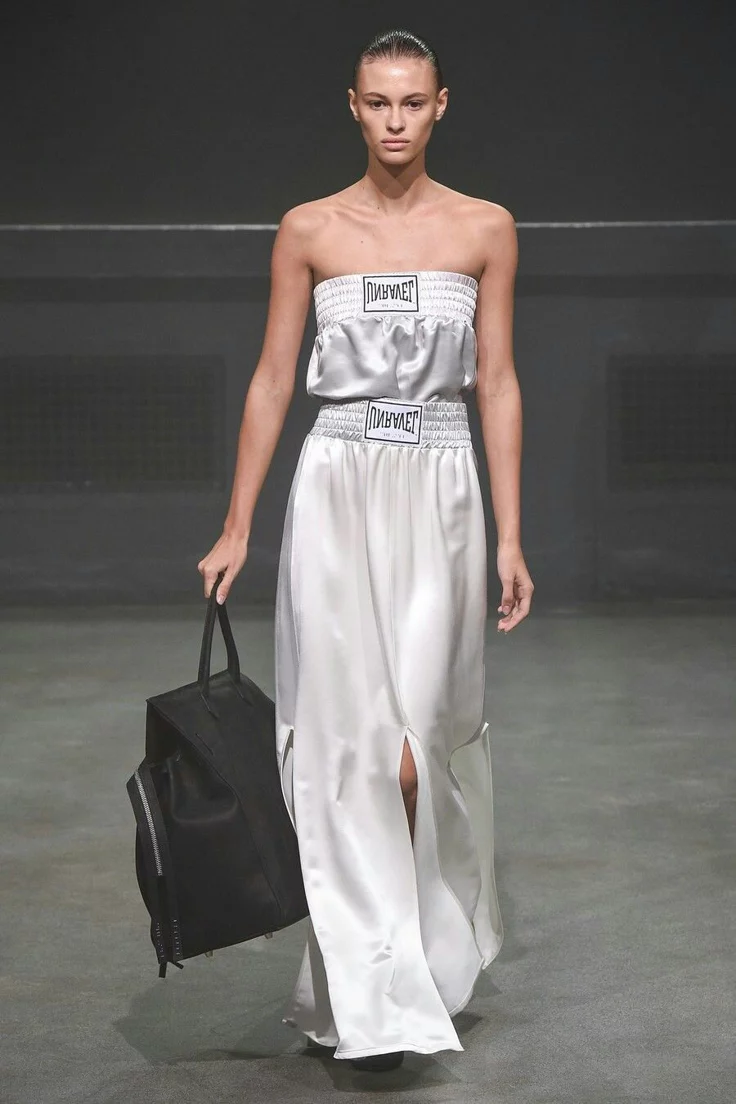
Unravel SS2018. Photo via Vogue.
The Walk Forward
What makes boxing style endure isn’t just the silhouette. It’s the intention behind it.
Every piece comes from purpose, and nothing is added without reason. That’s why it moves so easily into fashion—it already carries meaning.
The ring is not just a place of competition; it’s a stage where identity is constructed in real time.
And before the first punch is thrown, the outfit has already said everything.
